
The Hero
Military mothers are being asked to co-regulate their children through a grief they are not allowed to feel themselves.

That is not resilience. That is disenfranchised grief at scale — and it is the public health crisis nobody is pricing.
Playbook Kits is the mother-child regulation system built for the nervous system the military forgot.
The ask: USAA Foundation is the right partner to fund the pilot —three tiers, 100k to 400k, detailed at the bottom of this page. The pilot is already in production. We need the runway to finish it, measure it, and publish it.
I'm Dr. Monica Reintjes — educational psychologist, registered play therapist, licensed professional psychology, adjunct professor at GWU and W&M, founder of Playbook Kits, and an 18-year Marine Corps spouse on my third PCS. I am a Tricare in-network provider and support military families in my daily life.
The women I treat are the woman I am.
I have the clinical training to build the intervention, the lived authority to know it will actually work, and the research infrastructure to prove it does.

The Letter That Became This Work
Ask Dr. Monica · Marine Corps Association Column
Dear Dr. Monica,
I'm a Marine Corps spouse, and lately I've been struggling with a feeling I don't like to admit out loud: resentment.
I'm proud of my spouse's service. But over time, the constant moves, the career sacrifices, the solo parenting during long stretches, and the expectation to "just handle it" have started to wear on me. From the outside, I'm supposed to be grateful and resilient all the time. And I am — until I'm not.
I find myself resenting the Marine Corps for what it's taken from our family, and sometimes even resenting my spouse, which brings on a lot of guilt.
Is this normal? How do I work through resentment without feeling like I'm failing at this life we chose?
— Trying to Stay Supportive but Feeling Worn Down
She is unique.
She is weak.
She is failing.
She is every military spouse who has been handed impossible expectations and zero tools. This column exists because thousands of women are writing this same letter in their heads every day.
Playbook Kits is the answer I wish I could mail to every one of them.

Where this work is already trusted
Dr. Monica has brought this work directly to military families — in person and online — including the events below
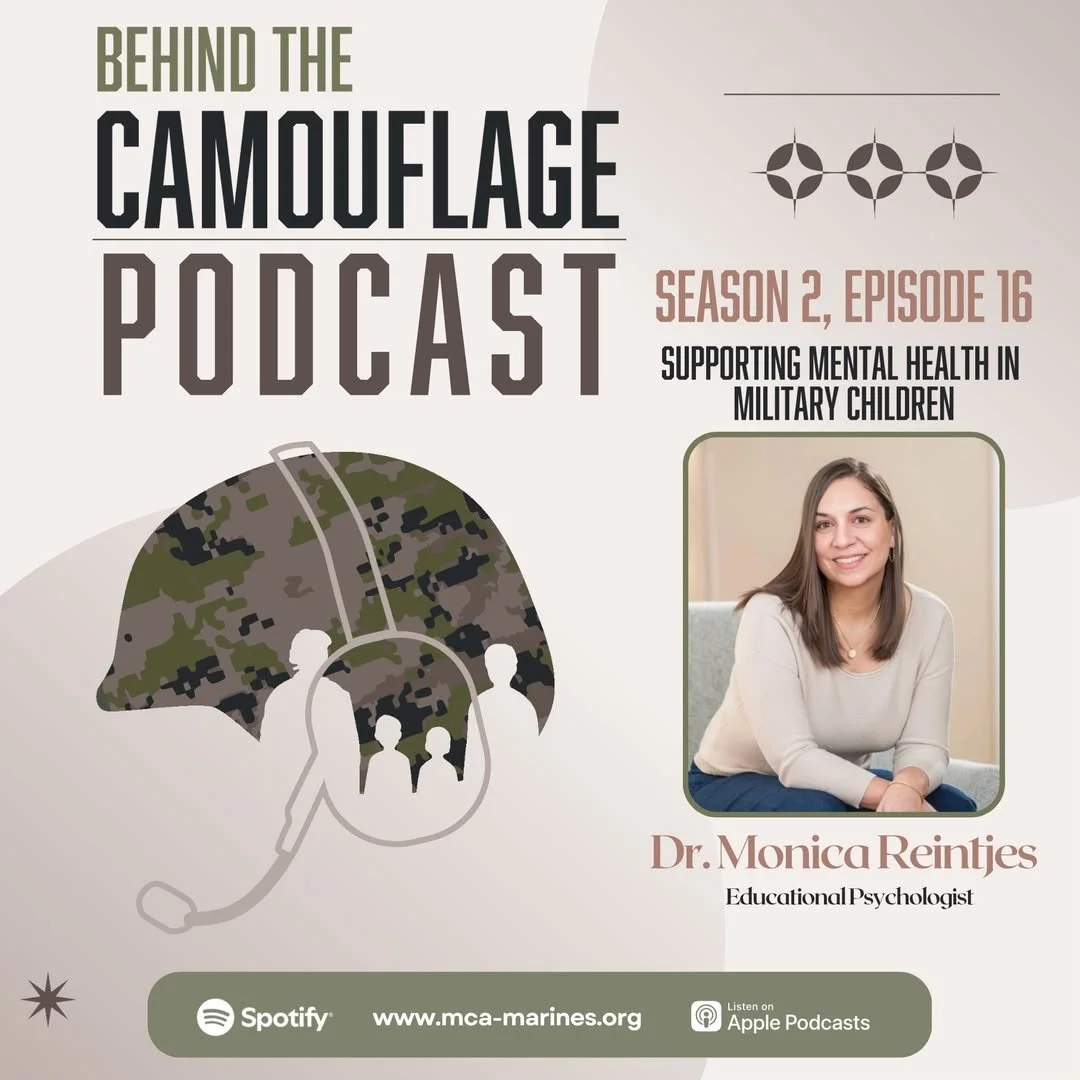
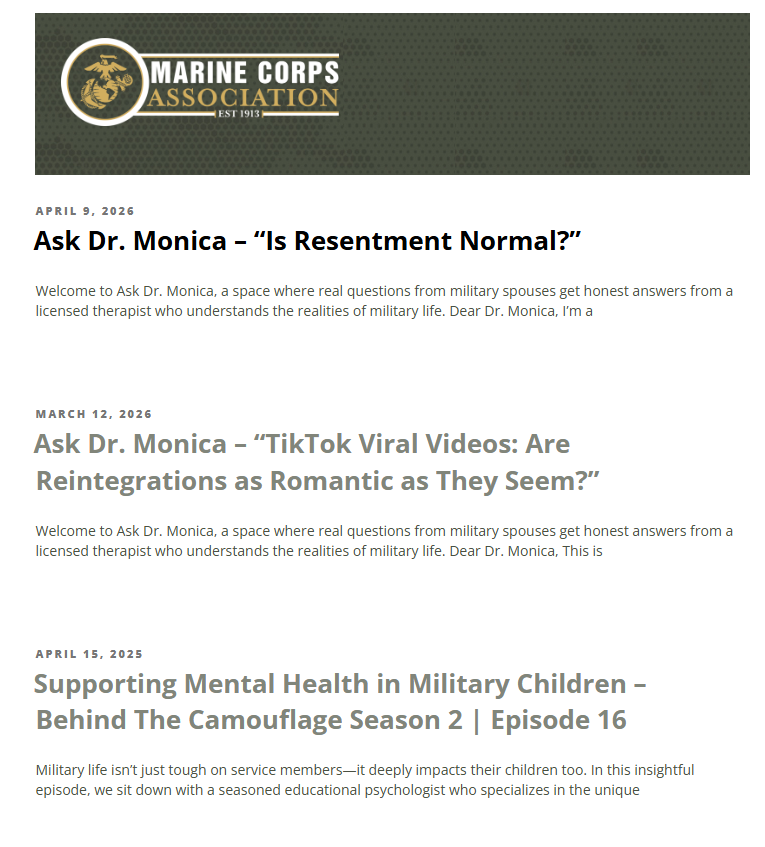
Ask Dr. Monica Blog in collaborating with MCA-Marines.org
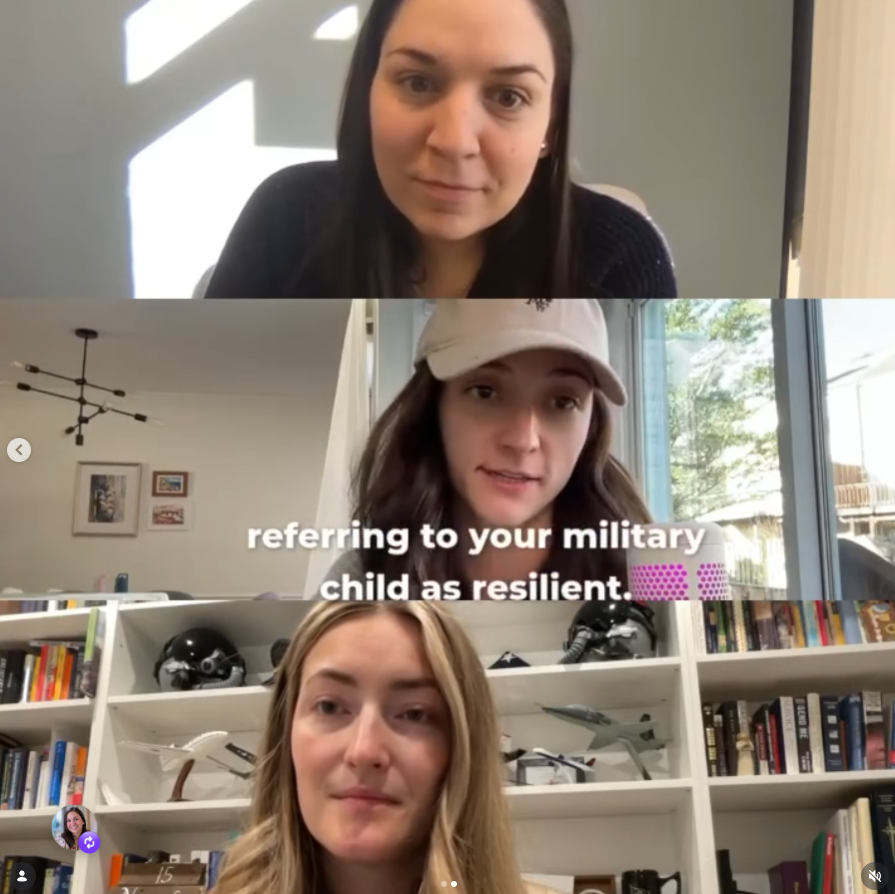

Monarch, a virtual event hosted by the Military Mom Collective last May 6th-8th, 2026

Joint Spouses Luncheon at Langley AFB Riverview Center, VA

— THE NEED —A population the data overlooked
For decades, military spouses distress was invisible in the data.
The department of defense did not begin reporting on military family suicide until 2019. An entire population’s mental health went unmeasured for years. What we can now see is sobering:
estimated annual suicide
attempts — 20x death
rate. Nearly all uncounted.
1 in 8
military spouses
screen positive for major depression
36.6%
of wives with deployed partners had a mental health diagnosis
1 in 6
experience generalized
anxiety — nearly 2× civilian rate
6 themes
reported by spouses: loss of control/identity, fear +
difficulty accessing care
Cole et al., The Professional Counselor, 2021 · DoD 2024 Annual Report on Military Suicide · Mansfield et al., NEJM, 2010

— WHAT DEPLOYMENT ACTUALLY DOES
When the car pulls away, she becomes everything.
Sole parent. Sole earner. Sole emotional regulator for children who are terrified. With zero support infrastructure.
This is not a metaphor. It is a documented public health crisis with a peer-reviewed mechanism.
WHAT THE RESEARCH DOCUMENTS
+39 excess depression cases per 1,000
“during deployments over 11 months ”
WHAT THE RESEARCH DOCUMENTS
3x
~2x
Child neglect
“Mothers are 3× more likely to maltreat their children when their spouses are deployed than when they are at home.”
“child-rates in military families after depl”
“Child neglect drives the increase — not physical abuse. Burnout. Not monsters. ”
THE PEER-REVIEWED MECHANISM
"Children's depression and behavioral symptoms
are predicted by the non-deployed parent's
mental health status."
Drummet et al., 2003 · Flake et al., 2009
Gibbs et al., JAMA, 2007.
THE LETTER THAT BECAME THIS WORK
Monet Goode

Mala Goodman

Eleanor Parks

Karl Holland

Jaya Dixon
Join Our Team

The mother is not just struggling.
She IS the intervention.
THE SOLUTION
Playbook Kits.
THE MOTHER GETS
The Playbook Guide
Co-regulation coaching in plain language. How to regulate herself first so she CAN be present. Evidence-based. No jargon.
Clinical Language She Can Use
Scripts for moving day. Deployment night. Meltdowns. Homecoming. The exact moments she has nothing left to say.
Employment
A job that honors her professional skills and fits her military life. Mala, Tracey, Andrea. This is what the team IS.
Community
The PROMOTORA network connects her to trained military spouse chapter leaders. Anti-isolation by design.
THE CHILD GETS
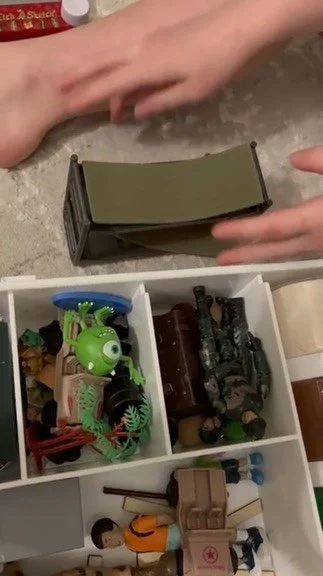
Military Figurines
3D printed to look like their family — a parent in uniform, a deployment bag. Symbolic play lets them process what they cannot speak.
Sensory Tools
Polyvagal regulation. When words fail, hands work. Meets distress in the body before language is possible.
Tactical Backpack
Ownership. Agency. Identity. A child who feels in control of something can tolerate transition.
Tracey Lucy Insert
Hand-drawn, IP-owned pattern design communicating safety and belonging. The art that arrives before the words do.
THE CLINICAL ARM
Every Kit Comes With a Number to Call.
-
$150/hr — LPC via Zoom
Every kit family gets a clinical check-in at intake and 90 days out. This is USAA's outcome data AND the family's clinical touchpoint. One call. Two purposes.
-
$25/child + pre-mailed activity sets
Trained listeners running play-based groups. They're not just facilitating art — they're watching for concerning play themes, negative thought patterns, quiet desperation. This is your early detection system.
-
$40/couple/week — NO TRICARE
Out-of-pocket by design. Privacy-protected. No diagnosis in the military record. No clearance risk. A military couple pays less than dinner out to get clinical support that actually fits their life.
-
$0 to family — grant funded
Any military spouse, anywhere in the country, gets free clinical support during deployment and PCS transitions. This is the equity argument. Geography cannot determine access to care.
— WHY THE CLINICIANS WHO CARE, CAN’T STAY
My best clinician left. Not because she didn't want to stay.
She is a clinical psychologist. She loves military families and first responders. She comes from a research background — the kind that generates publishable outcomes. She is also a military spouse.
She left my practice because TRICARE pays $70–90 an hour. After my 30% overhead and 10% supervision, she was taking home $44–57 an hour. With a doctoral degree. With a family to sustain.
She's writing VA disability claims now at $225 an hour. Not because she doesn't care. Because the economics of serving military families are broken.
She is not unique. This is happening everywhere. It is why military families wait 30+ days for a behavioral health appointment while qualified clinicians who want to serve them sit in front of a computer writing paperwork.
WHAT TRICARE PAYS
$44–57/hr
Net to a doctoral-level clinician after overhead.
Below what makes financial sense.
WHAT GRANT FUNDING SUSTAINS
$175–200/hr
Cash-pay rates that bring her back. With research capacity. With publishable outcomes.

This is already working without funding
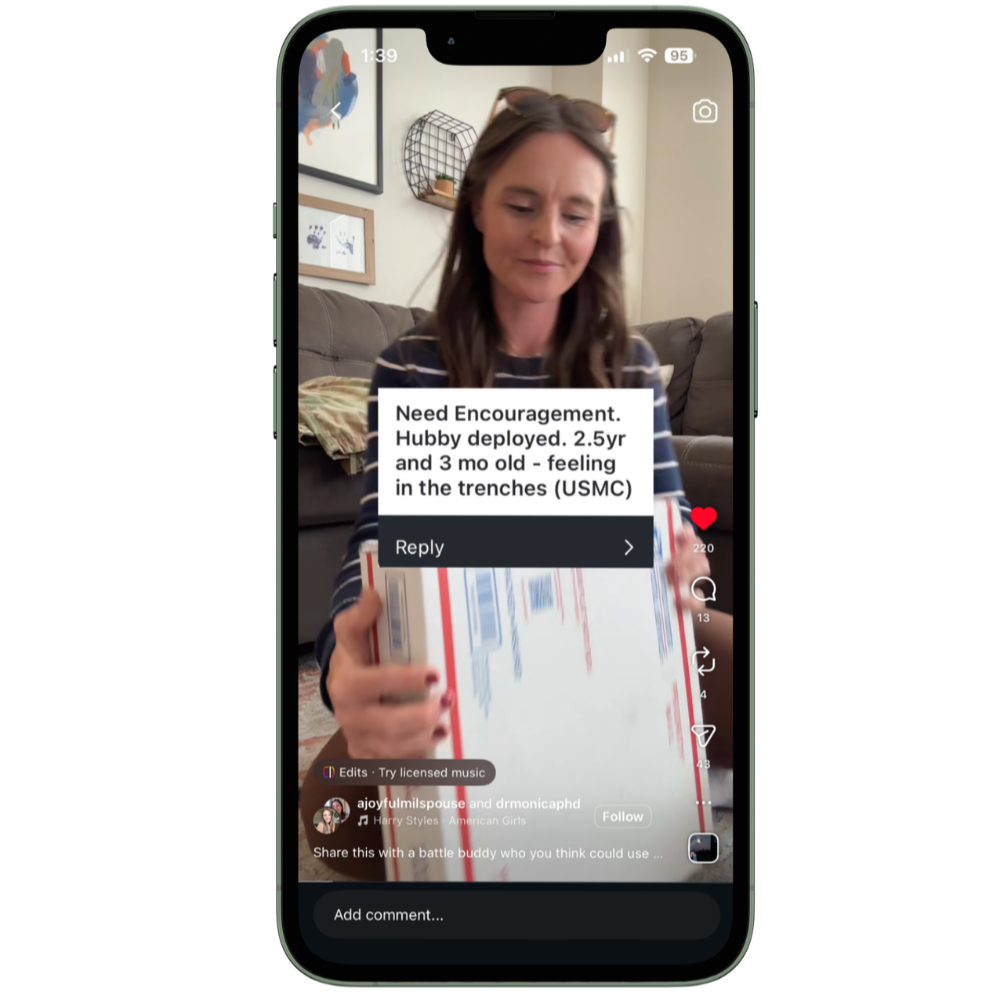
It was a great way to be intentional and age appropriate with my toddler about his dad's separation. It gives you step by step activities to help foster connection with young children surrounding separation! This exceeded my expectations and I’d recommend this to other families!
-Ashley
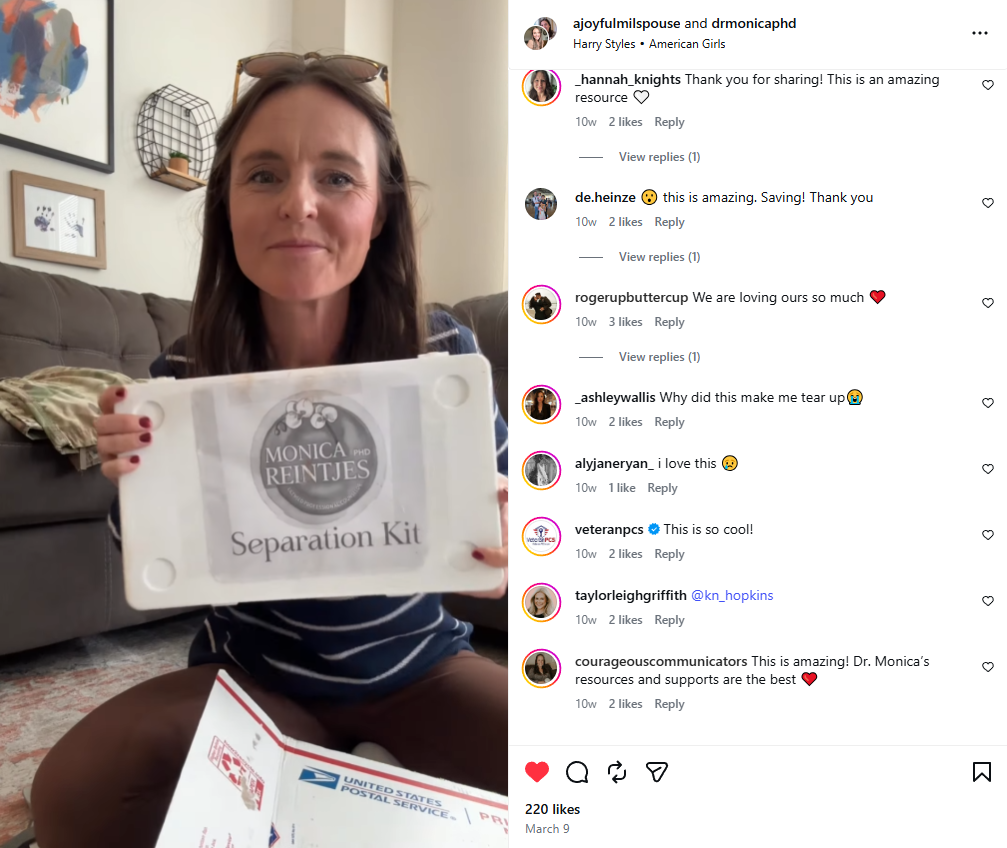
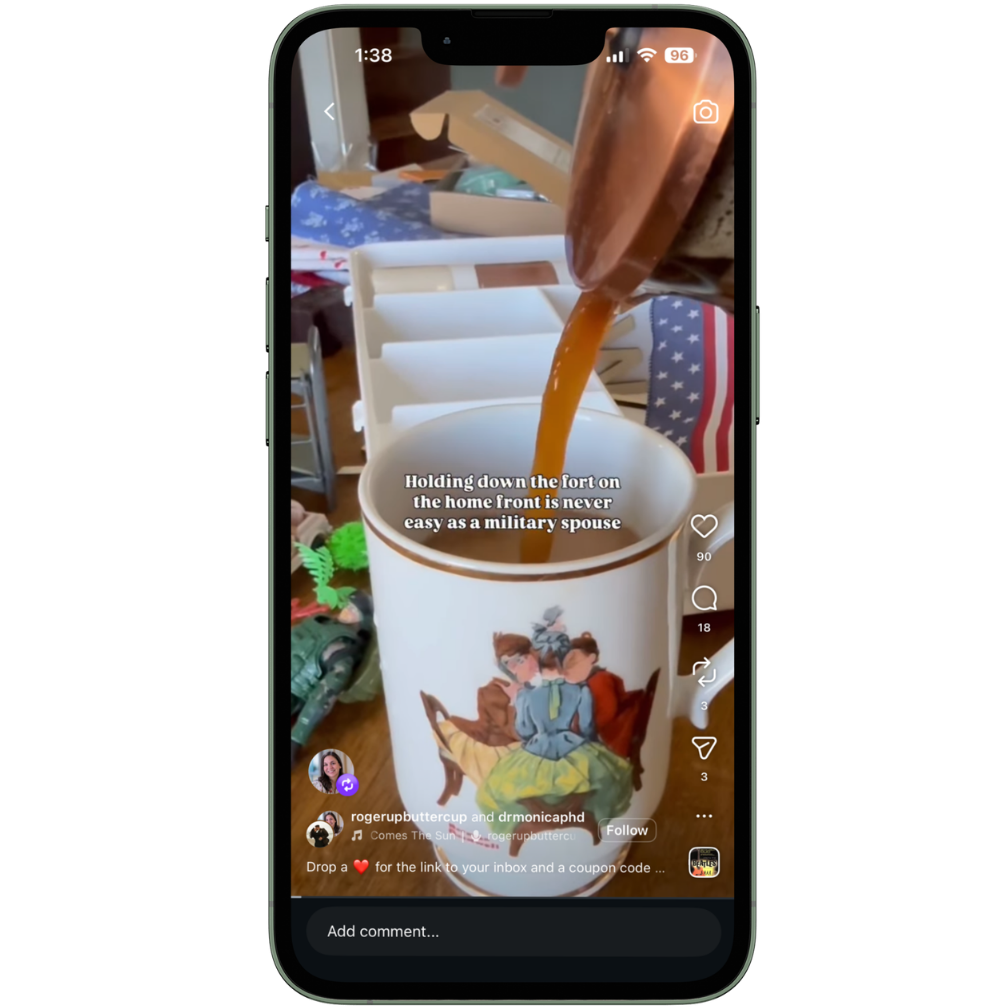
I love the beginning of the playbook with the explanation of parents as therapeutic agents and toys. I also love the first activity so much and how the directions are laid out and the supplies and the cues for conversation. We are gearing up for reintegration so my girls were really playing showing daddy gone and then cuddling with daddy when he gets back. Thank you so much for creating something like this so we have tangible tools!!!
-Clare
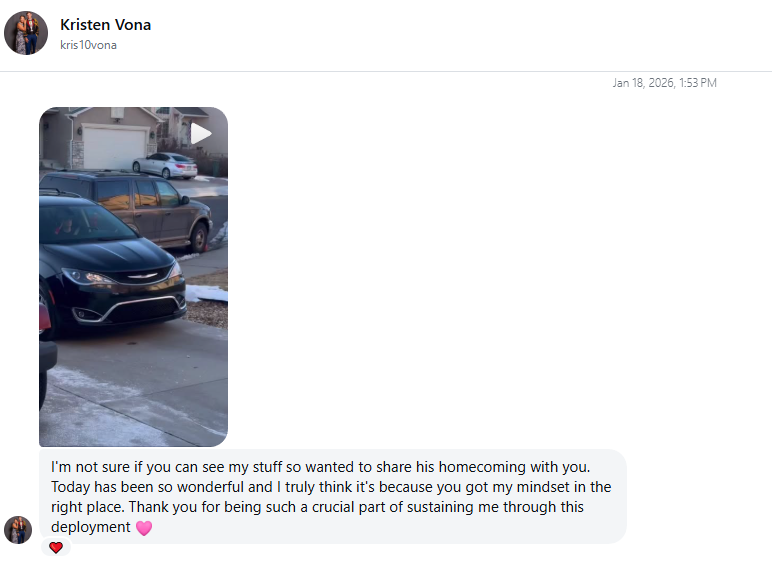
Expressed Interest to be a Beta Tester
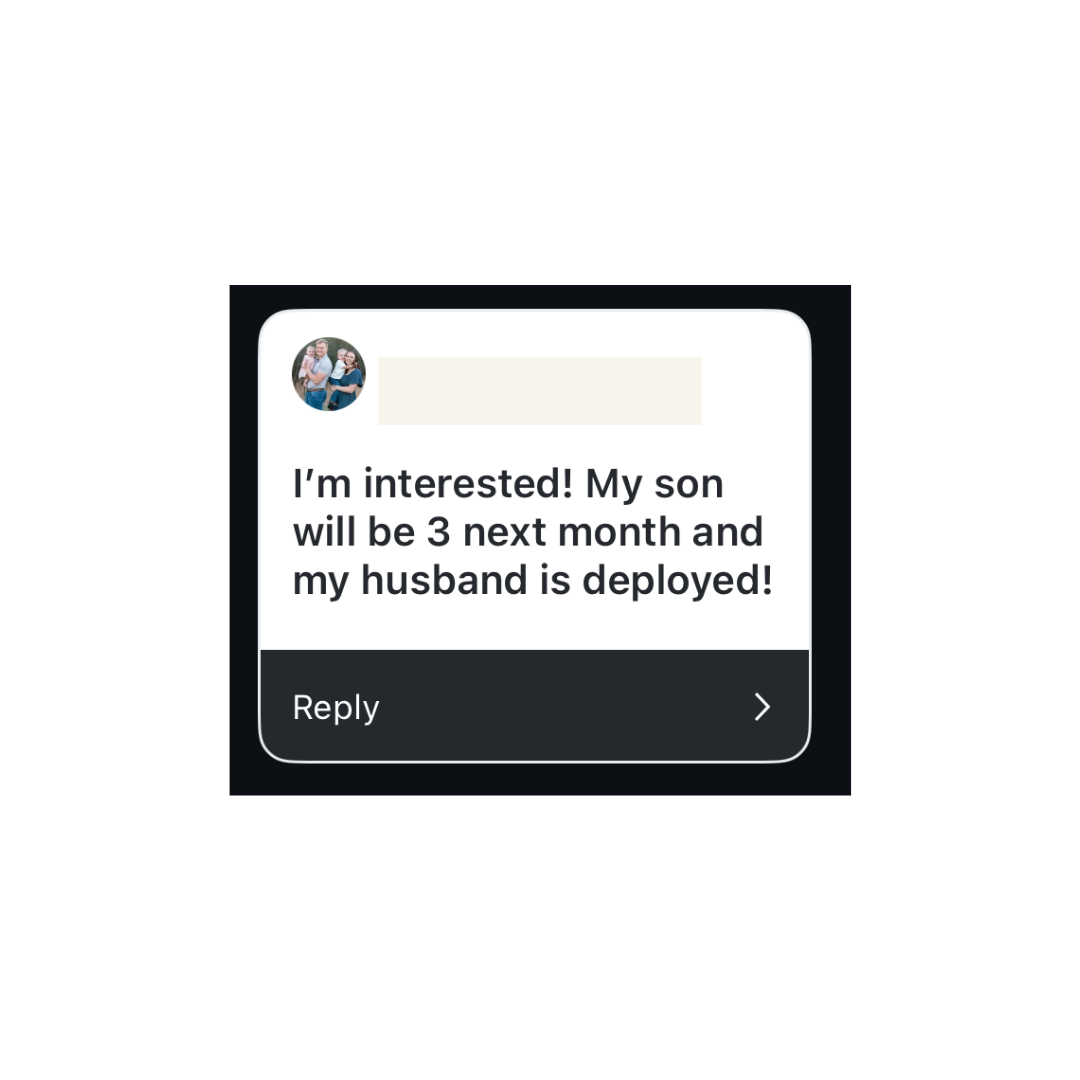
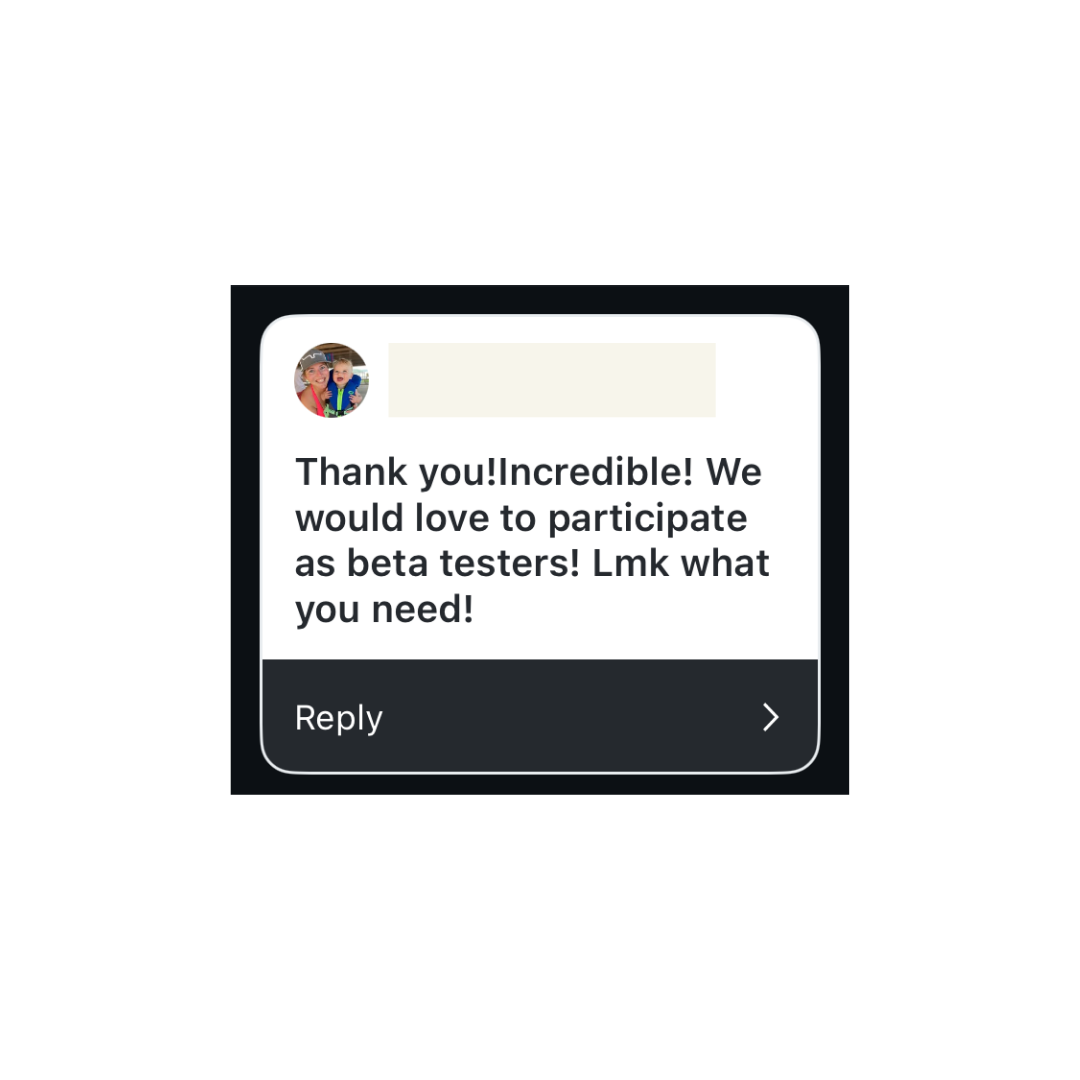
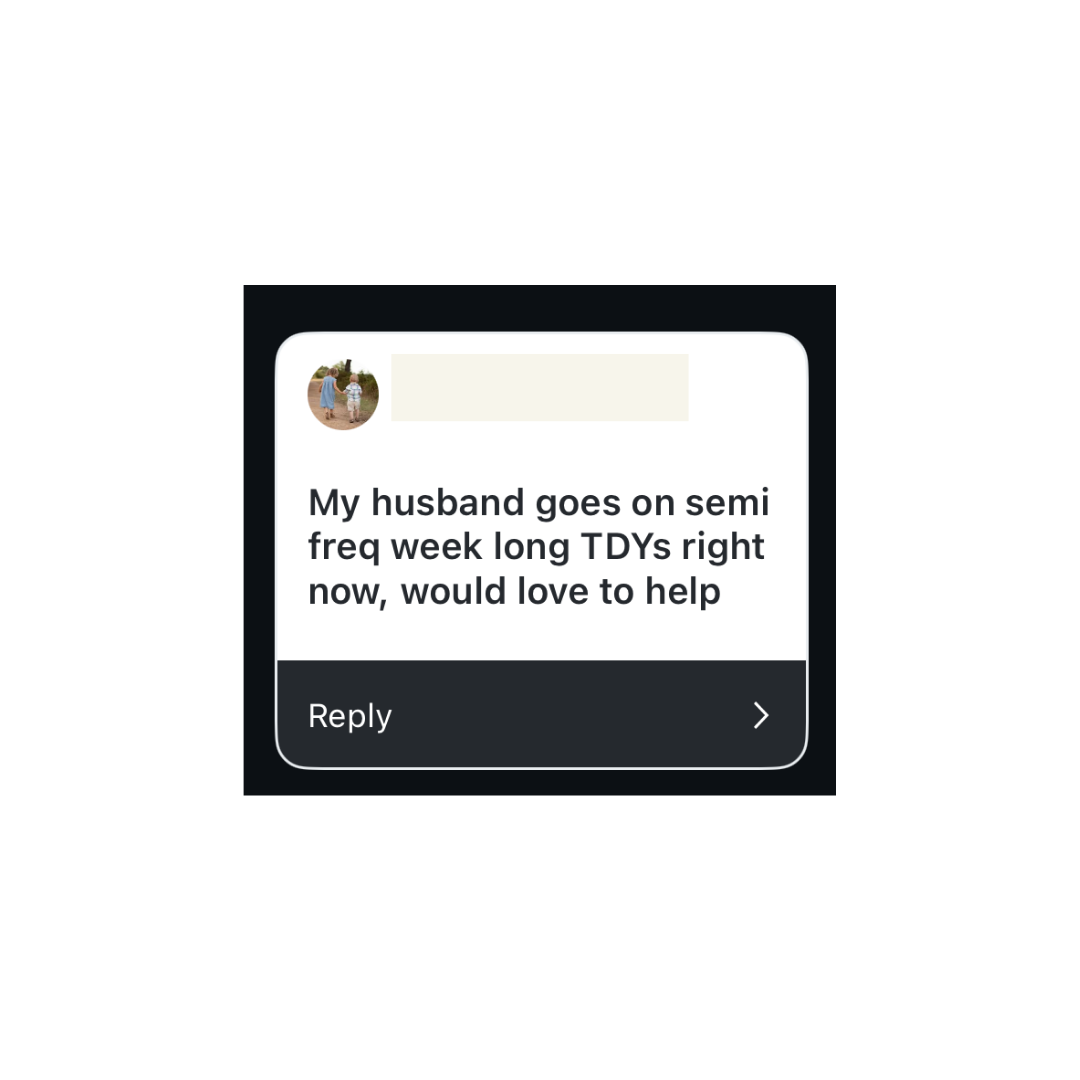
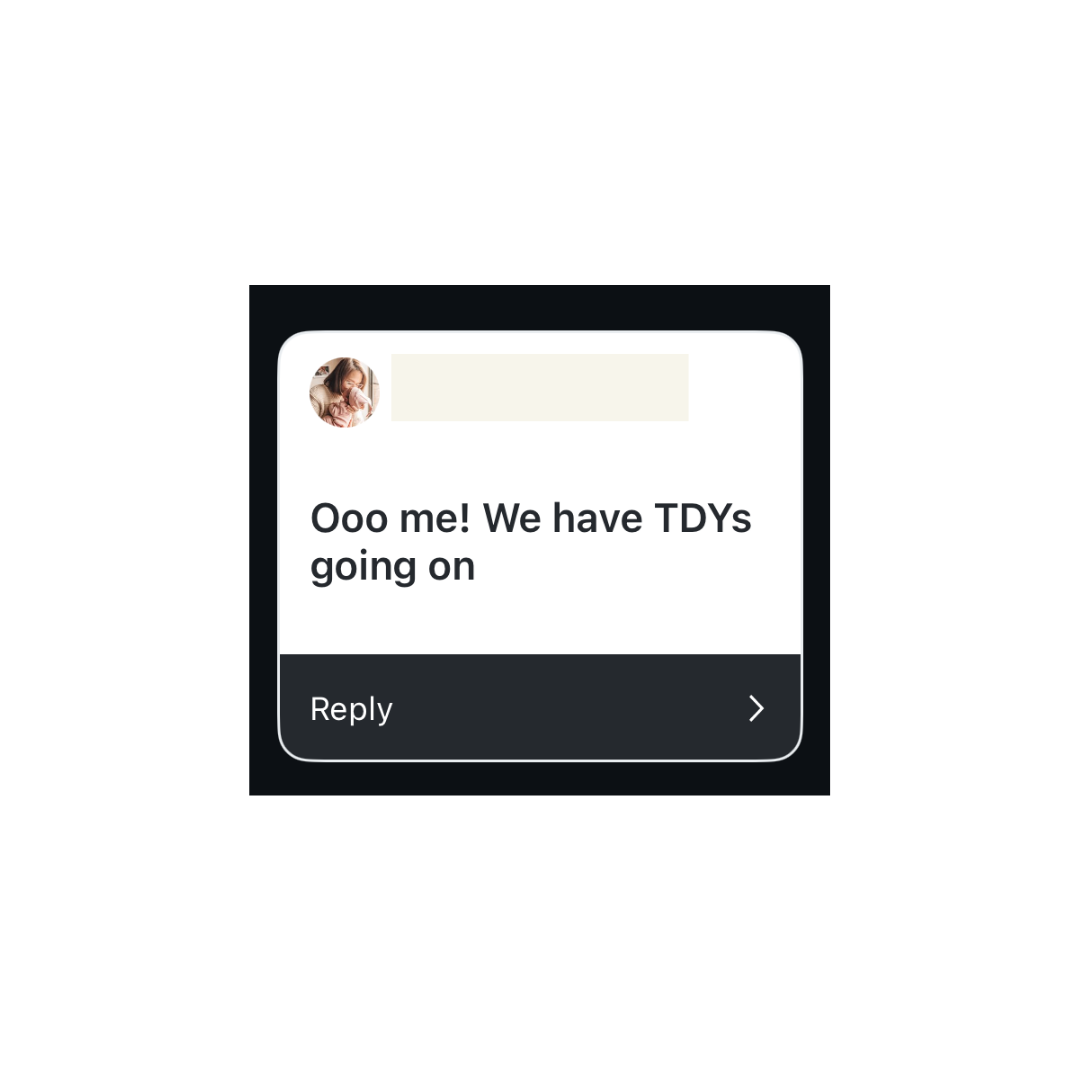
They raised their hands. They said yes. Then the price stopped them. That is not a product problem. That is an access problem. This grant removes that barrier.
Tier One - $100K
Kits only.
The minimum that proves the concept. 200 families served. Pre/post data. The product reaching the people who said yes and were stopped by price.
→ 200 kits delivered
→ Intake + 90-day check-ins
→ Outcome data collection
The Possibilities
Tier One - $260K
Kits + full clinical arm.
500 families served. Support groups running. Couples and children's therapy active. Coaching available. The full program operating at pilot scale — and publishable outcomes.
→ 500 kits delivered
→ Couples + children's groups
→ Free deployment coaching nationwide
→ Publishable outcome study
Tier One - $350-400K
Everything, including workforce.
The clinical psychologist returns. Research capacity comes online. PROMOTORA leaders trained and deployed. The program that can scale beyond pilot.
→ All Tier Two deliverables
→ Clinical psychologist hire
→ Research infrastructure
→ PROMOTORA chapter training